The Vanishing Technology
True intelligence lies not in presence, but in running silently at the bottom layer while responding precisely at the top layer. We reject cumbersome operations and fragmented devices. When technology fades into invisibility, leaving only the smooth extension of will, this is the highest form a smart system should possess.
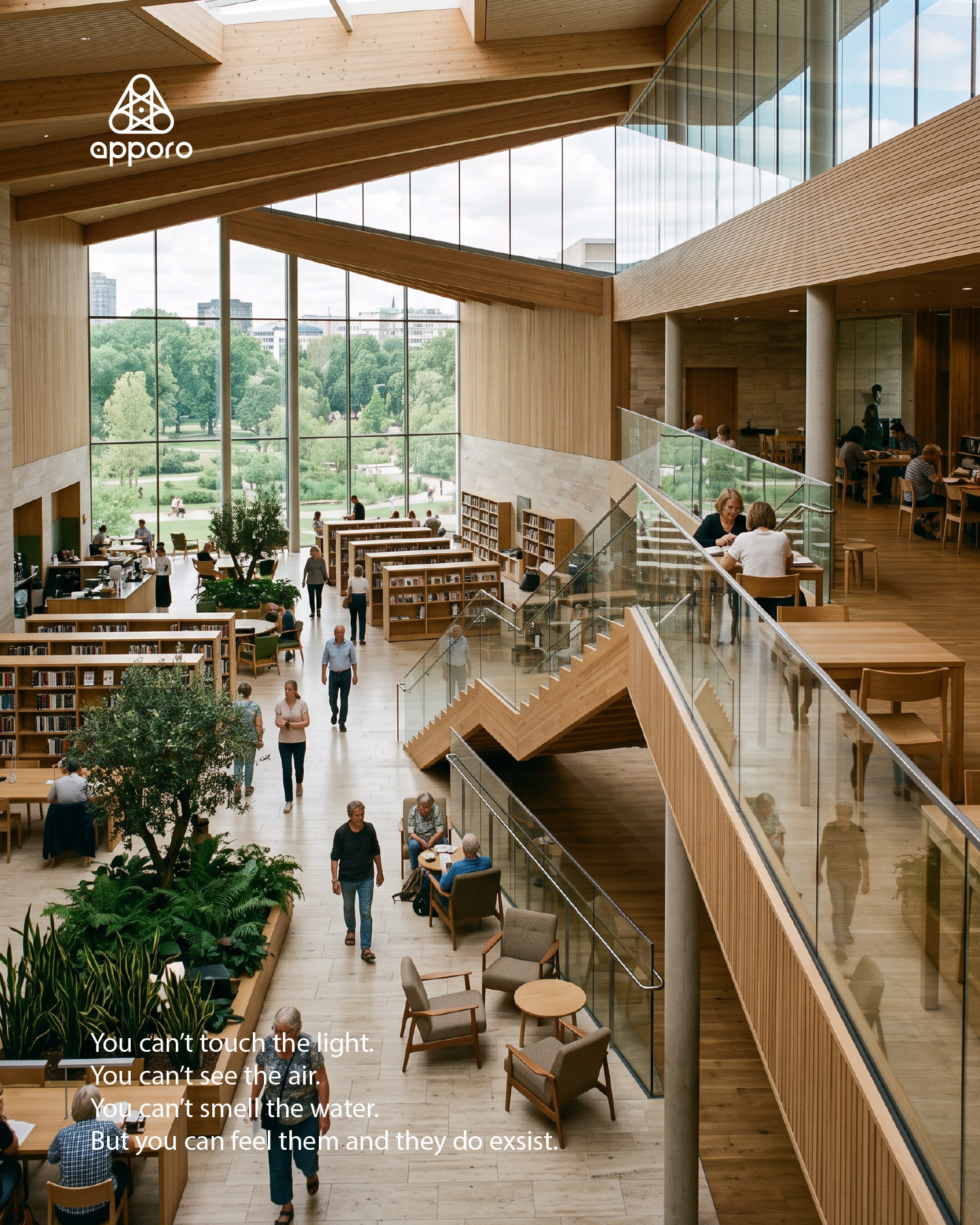
A smart residence that came with an instruction manual
True intelligence lies not in presence, but in running silently at the bottom layer while responding precisely at the top layer. We reject cumbersome operations and fragmented devices. When technology fades into invisibility, leaving only the smooth extension of will, this is the highest form a smart system should possess.
Consider a large private residence fitted out with the best devices available at the time. Lighting from one brand, climate from another, blinds, audio, security and the gate each from a third, fourth and fifth, every one with its own app and its own hub. The handover included a binder explaining how it all worked.
A year later the binder is the most used object in the house. Guests phone the owner to ask how to turn off the bedroom lights. The housekeeper has taped over two wall panels because pressing them does something nobody can predict. When the internet connection dropped for an afternoon, the blinds and half the lighting stopped responding. The family now uses a fraction of what was installed, and the rest is expensive decoration.
Technology with presence keeps asking for attention
Nothing in that house was faulty. Each device worked as its maker intended. The failure was that integration had been left to the people living there. To dim the living room for a film, someone had to translate that intention into three apps and a remote, in the right order.
That is what presence means in a smart system. Every visible seam between devices becomes a task the occupant has to perform, and every dependency on a cloud service becomes a way for the house to stop responding. The more capable the individual devices, the more seams there are, which is why adding equipment often makes a building feel less intelligent.
The seed text rejects cumbersome operation and fragmented devices together, and that pairing is precise. Fragmentation is the cause. Cumbersome operation is what the occupant experiences.
A system becomes invisible to occupants only when the integration work has been done underneath, by the system, instead of on top, by the people using it.
Running silently means continuing when something fails
Silence at the bottom layer is mostly a matter of what happens when things go wrong. A system that works perfectly until the internet drops is present in the worst possible way.
In an apporo architecture, the critical backbone runs on KNX. Group addresses are written into the devices themselves, so switches, sensors and actuators keep working together if the controller goes offline. Matter extends that backbone wirelessly across brands where running cable is impractical. Plant equipment joins over BACnet and meters over Modbus, and where a device has no standard protocol a custom API wrapper brings it in. Home Assistant sits above all of them as the integration layer.
Data stays local first, so the house does not need a distant server to turn on a light. Remote access for the owner or installer runs through Cloudflare Tunnel or Tailscale without opening ports on the network, and OTA updates keep the platform current without a site visit. Each of these choices removes a reason for the system to demand attention.
Responding precisely means one action per intention
The top layer is where a person’s will meets the building, and precision here means the shortest honest path between the two. An intention should need one action, and the result should be the one the person expected.
| Intention | Fragmented system | Integrated system |
|---|---|---|
| Watch a film | Three apps and a remote, in the right order | One scene on a panel sets lights, blinds, audio and climate |
| Leave the house | Walk the rooms checking lights and devices | One action at the door, with confirmation that everything is off |
| Welcome a guest | Explain the binder | Switches that do what switches have always done |
| Internet outage | Blinds and lighting stop responding | KNX devices carry on, and nobody notices |
apporo’s hardware is shaped around these moments. The AP-1004S serves residential settings such as living rooms, AV systems and touch panels. The AP-1005S serves commercial ones, from hotel lobbies to theme parks, installed in a rack out of sight.
Precision also means knowing when not to automate. People want some things under their own hand, and a system that overrides a guest who has just closed the blinds is present again. Manual choices should be respected and allowed to expire sensibly, not fought.
Invisible to occupants, fully visible to operators
There is a paradox at the centre of vanishing technology. The less the occupants see, the more the people maintaining the system need to see. A house that hides its workings from everyone becomes the house with the binder again the moment its installer moves on.
That is why the operator side is deliberately open. The GUI lets a facility team change scenes without writing code, drawing on a library of visual blueprints. Version control with rollback makes every change reversible, so adjusting the system never risks breaking it for the family. PHM predictive maintenance watches equipment behaviour and raises issues before occupants meet them. The O&M SOP handover records why each piece of logic exists, so the next team inherits understanding along with the configuration.
The limit is honest. Integration cannot rescue poor decisions made earlier, such as fixtures that cannot dim or a network with no room for the devices planned. Invisibility has to be designed in from the start of a project.
Language as the shortest path from intention to answer
Everything above works without AI. A KNX backbone, a clean integration layer, well-designed scenes and a maintained system already make technology disappear for the people living with it. That is ordinary engineering, and it should come first.
What a language model adds is on the questioning side. The system’s history sits in PostgreSQL through Supabase, and until now understanding it meant opening logs and dashboards built for technicians. With Pi Agent running on Home Assistant, the owner or house manager can ask about the building in a sentence, and the answer comes back in the same terms.
A model can phrase a weak answer confidently, so the logs behind it should always stay reachable. Within that limit, the last visible part of the system, the interface for understanding it, becomes as quiet as the rest: a question asked in plain words, and an answer that lets the building recede again.
Where to go from here
A system that disappears is what lets a space remove its own resistance.
Feng Shui 1.2 shows that at the scale of a single meeting room, where air, light and occupancy finally meet in one place, and the people inside notice only that the afternoon went well.
SYSTEM 3.2 of the Space Intelligence series on the Apporo blog.
Light · Air · Water · Control · apporo