Follow-Me Logic of Light
Switches are products of the last century. In the logic of the Hybrid System, light should move with the person and change with the routine. The system anticipates your movement through sensors, with light following like a shadow. The highest level of control is when you forget the switch exists.
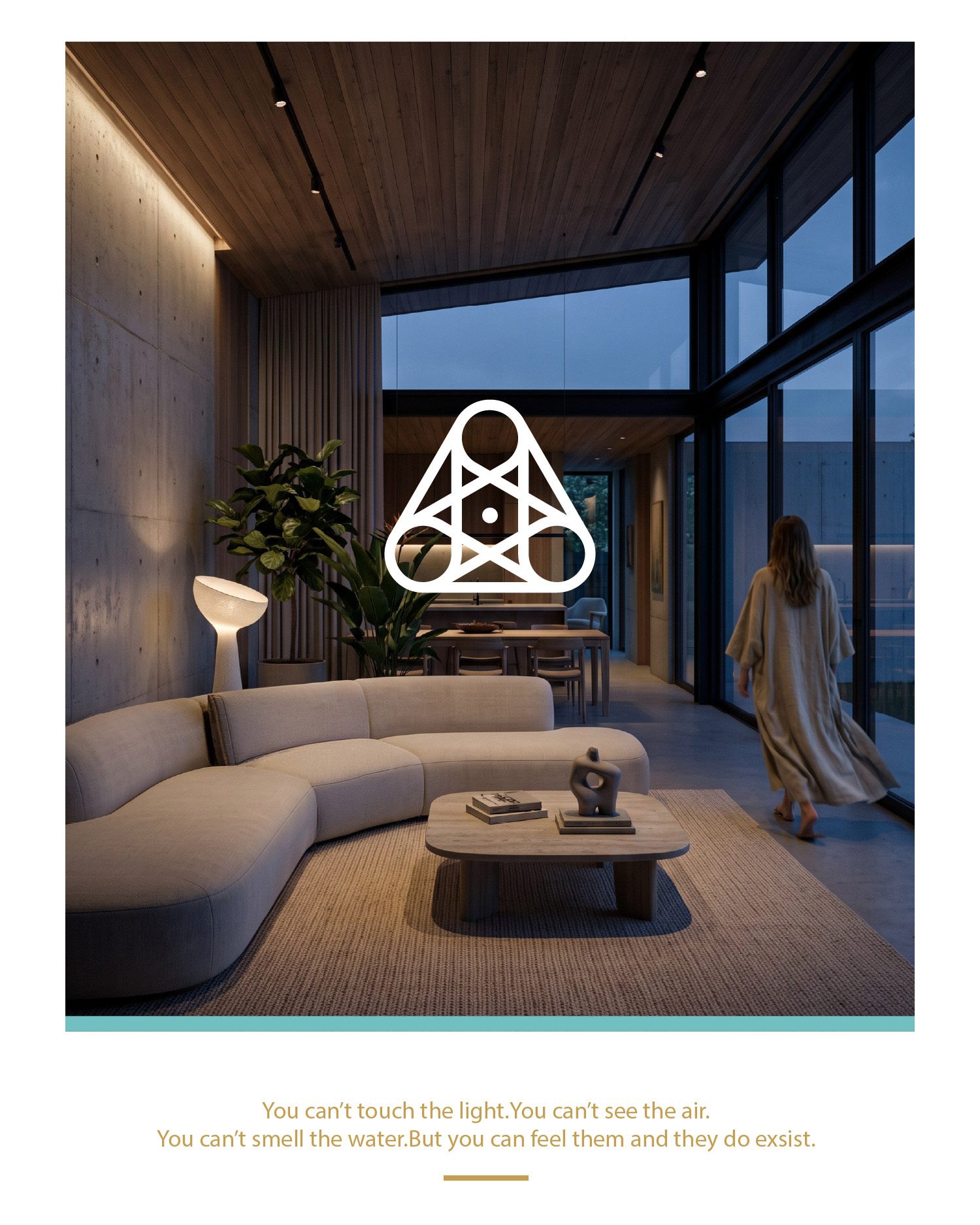
A smart house where people wave at the ceiling
Switches are products of the last century. In the logic of the Hybrid System, light should move with the person and change with the routine. The system anticipates your movement through sensors, with light following like a shadow. The highest level of control is when you forget the switch exists.
Consider a house where the switches were removed on principle. Motion sensors in every room, lighting on timers, nothing on the walls but a blank plate. For the first week it felt like the future.
Then the family sat down to read. Ten minutes later the living room went dark, and someone had to stand up and wave. In the corridor the lights now come on at full brightness at three in the morning, bright enough that returning to sleep takes another half hour. The guest who arrived last month stood in a dark hallway with nothing to press. The house did exactly what it was told, and the people inside it began working around it.
A motion sensor answers a narrower question than it appears to
A conventional motion sensor reports movement, not occupancy. A person reading, watching a film or working at a desk produces very little of it, so the sensor concludes the room is empty and the timer runs out. Every awkward moment in that house traces back to this single substitution.
The second failure is that movement says nothing about intent. Walking to the kitchen at noon and walking to the bathroom at three in the morning are the same event to a motion sensor and completely different events to the person. A system that cannot tell them apart has to pick one response, and whichever it picks will be wrong half the time.
The third is timing. Light that arrives after the person has already entered the room reads as a system catching up. Automation is only invisible when it is ahead of the occupant, and that is a matter of where sensors are placed as much as how fast they are.
Light that follows people needs to know that someone is present, roughly what they are doing, and what time of day it is. Movement alone gives only the first, and poorly.
Following the routine, not just the footsteps
The seed text asks for light that changes with the routine, and that is the part that separates a usable installation from a demonstration. The same corridor needs three different answers depending on the hour, and a building that knows which one to give feels considered rather than clever.
| Moment | Motion-only system | Follow-me logic |
|---|---|---|
| Entering at dusk | Corridor on, at one fixed level | Hall and the room ahead rise together, dimmed to the hour |
| Reading, sitting still | Timer expires, room goes dark | Presence detection holds the scene until the chair is empty |
| Night route | Full brightness at 3 a.m. | Low warm light on the floor, nothing above eye level |
| Leaving the house | Each room times out separately | One action at the door, with everything confirmed off |
The night route is where this meets the rest of the building. Bright cool light in the middle of the night is precisely the signal a circadian scheme spends the evening avoiding, so follow-me lighting after midnight has to be dim and warm or it undoes the work done earlier.
How the hybrid system is put together
Presence detection and wall controls sit on KNX, where group addresses live in the devices themselves and keep working if the controller is offline. Matter extends sensing into rooms where cabling is impractical. Luminaires answer through DALI, so a corridor can be dimmed to five per cent rather than switched. Home Assistant brings all of it into one entity model, and Node-RED expresses the rules as flows rather than as scattered device settings.
Anticipation comes from two places. Sensors at the approach to a space, rather than inside it, let light rise before the person arrives. People flow prediction, built from weeks of occupancy history, lets the system learn that this household moves between kitchen and terrace at a certain hour and have the route ready, instead of reacting at every step.
APS-1 hosts this in residential settings and APS-X in commercial ones, from hotel corridors to visitor attractions. The visual blueprint library lets a proven room pattern be reused rather than rebuilt per project, and version control with rollback means a change to the night rule that annoys the household can be undone the same evening.
Forgetting the switch is not the same as removing it
The seed text’s ambition is right, and the way it is implemented decides whether it works. A switch that nobody needs to reach for is the goal. A wall with no switch at all is a different thing: it leaves a guest, a cleaner or a contractor with no way to control the room, and it removes the fallback that keeps the space usable when a sensor fails or the controller is down.
A good installation keeps physical controls that do what physical controls have always done, and makes them rarely necessary. On KNX those controls keep working with the integration layer offline, which is the difference between a system that degrades and one that strands people in the dark.
Manual choices should also outrank the automation that prompted them. Someone who sets a room themselves has stated an intention, and the system should hold that choice for a sensible period before returning to automatic rather than correcting them a few minutes later. The reasoning behind each of these rules belongs in the O&M SOP handover, so the next team does not reintroduce the behaviour that was carefully removed.
Who can ask where the logic is getting it wrong
Everything above is sensing, integration and patient tuning. None of it requires AI, and a building should have it working well before anyone adds a model to the picture.
What a language model changes is how the tuning gets done. Every override, every timeout and every scene recall is in PostgreSQL through Supabase, and those records describe precisely where the logic annoys people. Reading them has always meant someone willing to go through event logs line by line.
With Pi Agent on Home Assistant, and OpenClaw coordinating the AI layer, the owner or the facility manager can ask the question directly and act on the answer.
Override data shows dissatisfaction, not its cause, and a model can offer a confident explanation of a pattern it cannot see the reason for, so the findings belong back with the occupants for confirmation. Within that limit, the system can be corrected where it actually fails, which is what eventually lets people forget the switch is there.
Where to go from here
Light that follows a person still has to be shaped before it can follow anyone well.
Feng Shui 5.1 returns to the layers themselves, where the angle light enters a room and the surfaces it reaches decide how that room feels.
SYSTEM 5.3 of the Space Intelligence series on the Apporo blog.
Light · Air · Water · Control · apporo