Circadian Calibration
Modern insomnia is mostly caused by light misleading melatonin production. The WELL standard requires lighting to simulate the spectral changes of sunrise and sunset. Giving the correct spectrum at the correct time is the most powerful calibration for the body clock.
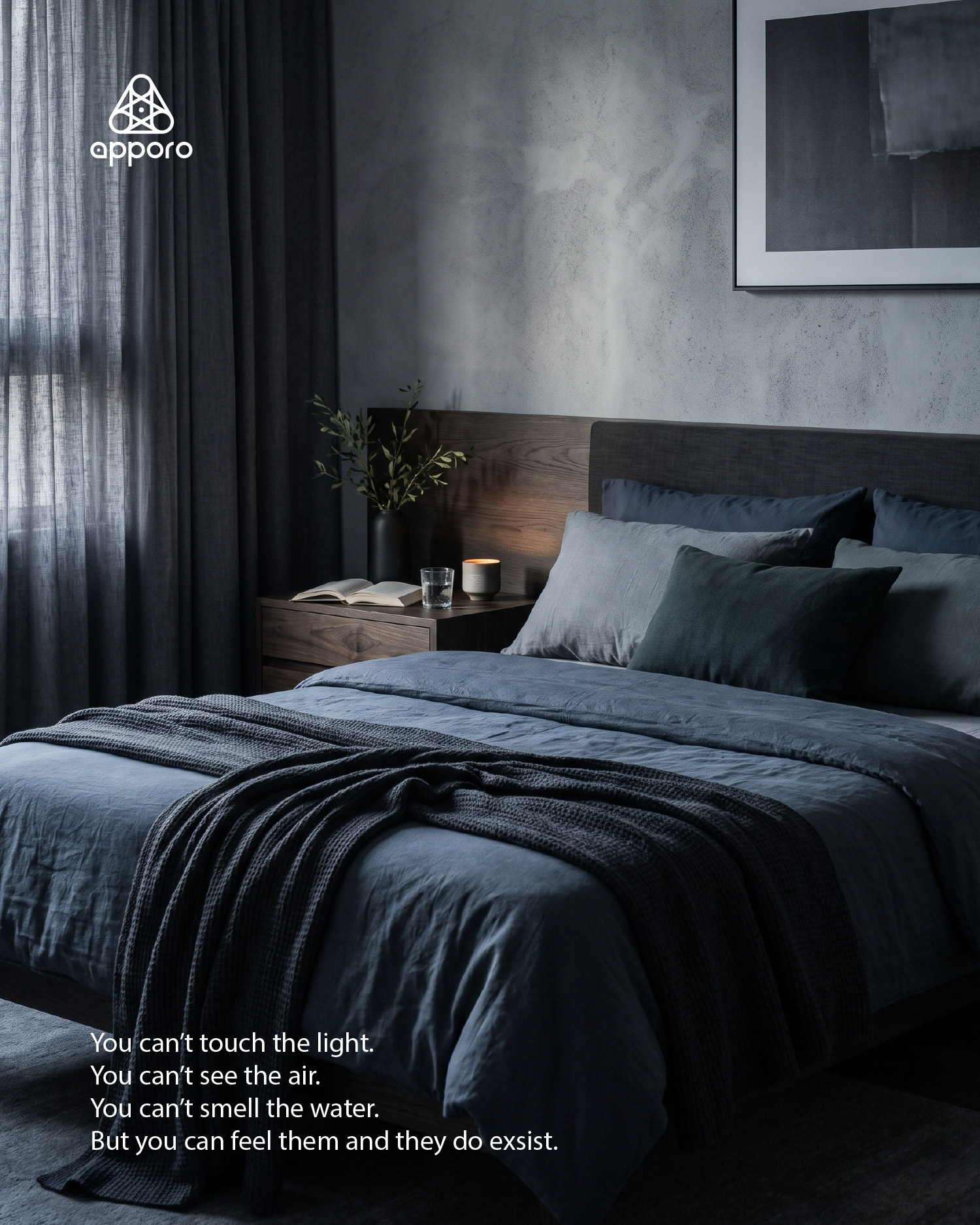
A hotel room that is the same at noon and at midnight
Modern insomnia is mostly caused by light misleading melatonin production. The WELL standard requires lighting to simulate the spectral changes of sunrise and sunset. Giving the correct spectrum at the correct time is the most powerful calibration for the body clock.
Consider a business hotel that specified one high-quality cool white lamp throughout. It photographs well, it is easy to stock, and every room is identical. A guest arrives late, turns on the lights to unpack, works for an hour, and goes to bed under the same light that was chosen to make the lobby look crisp at nine in the morning.
The guest sleeps badly and blames the mattress, the air conditioning or the time zone. The hotel hears nothing specific, because nobody files a complaint about the colour of a lamp. The building has no way of knowing that one of the few things it fully controls is working against the people it is trying to serve.
Lighting is specified for seeing, not for timing
Most lighting specifications answer one question: is there enough light to perform the task safely and comfortably. That question has an answer in lux, it is easy to verify at handover, and once satisfied the fixture never changes for the rest of its life.
The body does not read a room that way. Light is also the signal that tells the body what time it is, and a signal that never changes carries no information. A building that holds its light constant is telling everyone inside that it is the same hour all day.
The claim needs stating carefully. This article does not diagnose insomnia or promise better sleep. Research on light timing and the body clock is the basis for the standard’s criteria, and that is the ground this series stands on. What a building can be held to is narrower and verifiable: whether its light changes with the day at all, and whether anyone can show that it did.
Lighting designed only for visibility answers one question well and ignores a second question the body is asking all day.
What circadian lighting design actually requires
The WELL Building Standard addresses light in a dedicated concept, including criteria for circadian lighting design alongside visual comfort, glare and electric light quality. Its approach is to specify the light reaching occupants at the eye, over the hours they are present, rather than the output of a fixture in isolation.
Two consequences follow for a project. The first is that vertical illuminance matters, because what reaches the eye comes mostly from surfaces in the field of view rather than from a downlight above the head. The second is that the criteria are about a schedule, so they cannot be satisfied by a one-off measurement at handover. A building meets them by behaving a certain way every day.
For owners pursuing certification, that schedule has to be evidenced. Continuous records of what the lighting system did, zone by zone, serve recertification data collection without anyone assembling a special report, because the building needed those records to operate correctly in the first place.
Giving a building a morning and an evening
The hotel room needs three things it does not have: fixtures that can change colour temperature and level, a clock that follows the actual sun rather than a fixed timetable, and a way for the guest to depart from both.
| Time of day | Fixed installation | Calibrated installation |
|---|---|---|
| Morning | Cool white at full output | Brighter, cooler light rising with local sunrise |
| Working hours | Unchanged | Daylight carries the load, electric light fills what is missing |
| Evening | Unchanged | Warmer and lower, following local sunset through DALI |
| Night route | Full room lighting or nothing | Low warm path lighting on the way to the bathroom |
Home Assistant drives this from the sun’s position for the building’s own location, so the schedule shifts through the year instead of drifting out of step in winter. On the hardware side, APS-1 serves residential and guest-room settings, and APS-X serves commercial installations such as hotel public areas, mounted in a rack out of sight.
The guest’s own choice ranks above the schedule. Someone working late who wants bright neutral light should get it from one press, and the room should return to its default when they leave. A schedule that cannot be overridden gets defeated with a desk lamp.
Where circadian lighting argues with everything else
A warm, dim evening is the right answer for sleep and the wrong answer for a late meeting, a kitchen or a reception desk that has to look alert at ten at night. Those are real needs and they belong to the same building.
There is a resource argument as well. Tunable fixtures cost more, and a scheme that runs two channels where one would do uses more energy for the same illuminance. Running warm light at full output in the evening is a poor trade on both counts; dimming as the colour warms is the version that holds up.
The honest caveat is individual variation. People differ in chronotype and in how much light they get outdoors, which matters more than anything a building does. Calibrated lighting removes an obstacle the building was placing in the way. It is not a treatment, and nobody should sell it as one.
Who can ask whether the schedule actually ran
None of this needs AI. Tunable fixtures on DALI, a sun-aware schedule in Home Assistant and a respected override deliver the whole effect, and that is ordinary engineering.
What a language model changes is who can audit it. The history in PostgreSQL through Supabase records colour temperature, level and override for every zone, every evening. An operations director with a complaint about sleep quality has, until now, had no practical way to look at that.
With Pi Agent running on Home Assistant, the people responsible for the guest experience can ask without an engineer in the room.
Override patterns describe preferences, not sleep, and a model can overstate what they mean, so conclusions belong with the people who run the building rather than with the model. Within that limit, a lighting schedule stops being a promise in a specification and becomes something that can be checked.
Where to go from here
Every electric scheme is an attempt to replace something the sky provides for nothing.
LEED 5.4 looks at daylight, why buildings designed for it often end up behind closed blinds, and what it takes to use what the design already captured.
WELL 5.2 of the Space Intelligence series on the Apporo blog.
Light · Air · Water · Control · apporo